Creatine Update — A Gummy Cautionary Tale
A trip down the creatine-gummy rabbit hole: a quality scandal, why supplements aren't FDA-regulated, and how to actually verify what's in the bottle.
Thought I'd share a recent experience with a creatine product. My brother texted me a picture of some creatine gummies he'd been using. I was curious and asked how much sugar they had. "One gram," he said, and added that they tasted good. In my experience, gummy anything usually packs in more sugar than I want, but at one gram I figured I'd give them a try.
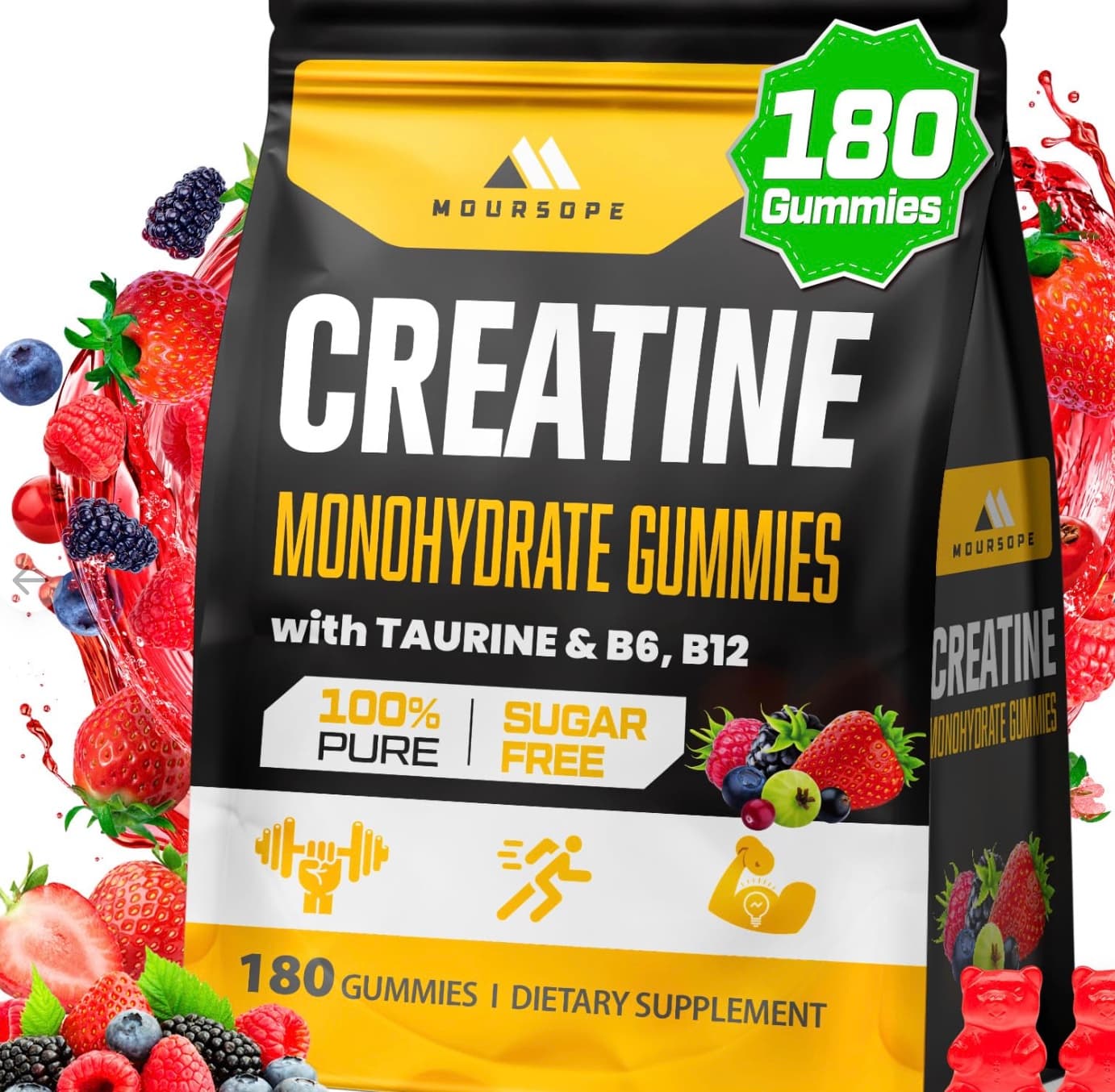
I ordered a bag of Moursope Creatine Berry Gummies on Amazon (pictured above), and he was right — they tasted good. My normal routine is the second thing I do after waking up: 20 oz of water with 10g of creatine powder mixed in, which has virtually no taste. But the gummies tasted better than "no taste," and as silly as it sounds, eating 4–5 gummies felt easier than mixing powder into water. I still drink the 20 oz of water either way.
When the bag ran out I went to reorder, and couldn't find them anywhere in my Amazon order history. Odd — very odd. After some digging I discovered the product photo had been pulled from my order history, which is why I'd missed seeing the order itself. I found the photo my brother had sent me and went looking for the product on Amazon… nowhere to be found.
I shot my brother a quick text, and being the AI enthusiast he is, I got back the results of an AI query showing no recalls or other issues. However it did show:
Creatine gummies as a category are in the middle of a quality scandal. Multiple third-party labs found that several Amazon-sold gummy brands (EcoWise, Vidabotan, Happyummmm, DivinusLabs, and others) contained little or zero actual creatine despite their label claims, but did not mention the brand I had purchased.
The fact that Amazon thought it appropriate to delete the image of the creatine gummy product — and the actual product itself — from its site entirely (as far as I can tell) doesn't exactly give me the warm fuzzies.
This was a good reminder of what I knew but hadn't applied when I originally purchased the gummies.
There is no FDA or regulatory requirement on the contents of vitamins or health supplements. Meaning what's in the bottle is under no legal obligation to match what's on the label. So of course someone is going to sell plain gummies under whatever the latest buzzword benefit is. Creatine itself has been around since 1832, when French scientist Michel Eugène Chevreul discovered it in meat broth and named it after "kreas," the Greek word for meat. It went mainstream in 1992, when elite athletes used it at the Barcelona Olympics and brought it into the global sports spotlight.
So how do you actually know whether you're getting real creatine, a placebo, or whatever else a label happens to claim? The answer is independent testing, such as ConsumerLab. I mentioned in my original post that I use Thorne brand creatine — ConsumerLab gives Thorne their "Approved" rating, showing a 5-gram scoop actually contains 5.19 grams of creatine. Thorne creatine is also NSF Certified for Sport.
Affiliate link · As an Amazon Associate I earn from qualifying purchases
The NSF Certified for Sport® seal is an independent third-party certification ensuring that dietary supplements and sports nutrition products don't contain unsafe levels of contaminants, heavy metals, or any of the 280+ substances banned by major athletic and anti-doping organizations.
NSF's Certified for Sport® program has official support and recognition from numerous professional sports organizations, including Major League Baseball and the MLB Players Association, the National Football League and the NFL Players Association, the National Hockey League, the PGA of America, and the LPGA. NSF tests for more than 270 substances banned by the World Anti-Doping Agency and the U.S. Anti-Doping Agency.
As a friend's father used to say, "You get what you pay for, and if you don't pay enough you're gonna get it!"
The bottom line — and it's become a common disclaimer on thousands of YouTube videos — is DYOR: Do Your Own Research. Don't take the word or testimonial from a friend, a social media influencer, or most certainly not my brother! :)
Share this
Rowing is Life